Aug 24 2010

What’s the best stain for Auer rods?

Q. What stain is used for demonstrating Auer rods in myeloblasts? Myeloperoxidase or PAS?

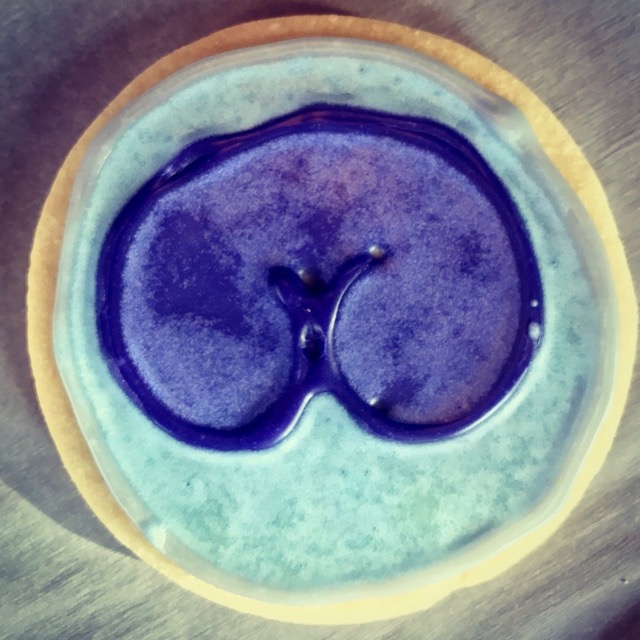
A. The best stain for demonstrating Auer rods is the myeloperoxidase (MPO) stain. This stain highlights one of two main populations of granules in the neutrophil: the primary (or azurophilic) granules. Secondary (or specific) granules do not light up with MPO. I could never get that straight until I realized that the Primary granules were Purple (okay, “azurophilic,” but close enough). Using this differential staining, it is possible to classify neutrophil maturation into four distinct stages:

1. Myeloblast. This is the earliest committed stage of development. These cells will turn into neutrophils if you just leave them alone. They look like typical blasts (high n/c ratio, big nucleus with fine chromatin), and they may or may not have a very small number of tiny primary granules in the cytoplasm. (Even myeloblasts that do not have these granules have been shown using immunohistochemical markers to be of the myeloid lineage.)

2. Promyelocyte. This is the next stage in development. Primary granules start appearing in abundance at this stage. The cell is larger than it is at any other stage of development. I love this stage; it is my favorite stage (doesn’t everyone have a favorite stage of neutrophil development?) because it’s just so dang pretty. Huge cell, beautiful blue cytoplasm, and these gorgeous luminous purple granules. Yum. If I could eat any cell, I’d eat a promyelocyte. I think it would taste like grape candy.

3. Myelocyte. At this stage, the cell is a bit smaller, and there are lots of secondary (specific) granules around. These don’t stain with MPO, so they end up as sort of pale orangeish pink. They’re said to be fawn-colored, but I haven’t seen any fawn with that color fur. Then again, I haven’t seen many fawns. The number of primary granules is significantly less (because promyelocytes divide into two cells, which mature out to become neutrophils. This means that the number of primary granules in the daughter cells is significantly smaller than in the mama promyelocyte (due to dilutional effect). The nucleus gets a bit smaller, and the chromatin condenses a bit.

4. More mature cells: metamyelocytes (these are basically just myelocytes with an indented nucleus and a bit more nuclear condensation) and neutrophils (cells in which the nucleus has multiple lobes – at least three). These more mature cells (metamyelocytes and neutrophils) can’t be differentiated on the basis of MPO staining alone, like the three preceding cells can. You need to use other parameters, like size and shape of nucleus.

Cool article on this: Neutrophil Secondary-Granule Deficiency as a Hallmark of All-Trans-Retinoic Acid-Induced Differentation of Acute Promyelocytic Leukemia Cells. Miyauchi J, Ohyashiki K, Inatomi Y, Toyama K. Blood 1997; 90(2):803-813.

So what does all of this have to do with MPO staining of Auer rods?  Well, since Auer rods are basically clumps of azurophilic granules which contain peroxidase and other stuff, the MPO stain works well on these structures. The PAS stain highlights glycogen (not myeloperoxidase), so it stains a bunch of different cell types, like red cells and megakaryoblasts, but it is not of much use when looking for Auer rods.

If you were looking for Auer rods, and you wanted to do a special stain other than MPO, you could do a Sudan Black B (SBB); it provides results identical to those of MPO. Or you could just look at the Wright-Giemsa-stained smear and forget about the special stains for the moment. The MPO and SBB are good in that they will highlight more of the Auer rods than you can see using just the Wright-Giemsa stain – but often, you see so many on just the Wright-Giemsa alone that you don’t need to bother with an MPO. Check out the Wright-Giemsa-stained Auer rods (tons of them!) in the above cell from a case of acute promyelocytic leukemia.


Jul 16 2010

What are the best pathology books?

Q. I’m will be starting my pathology residency in about a year. Any suggestions for getting prepared for residency? I have been reviewing www.enjoypath.com and others, but wanted to get your opinion.

A. Good for you! When many people think of pathology (do many people think of pathology?), they think of surgical pathology – stuff that comes out of the operating room, biopsies, etc. But there are many other parts to a pathology residency, such as hematopathology, microbiology, forensic pathology, and blood banking. I’ll run through some of the books used in these areas, then I’ll tell you what I would have done if I knew then what I know now.

Surgical pathologyRosai’s Surgical Pathology is probably the most commonly-used book; another good source is the set of AFIP Fascicles (there’s a fascicle on pretty much every organ system). These sources are too in-depth for you now (with one exception that I’ll mention in a minute), and probably too expensive. They’re more for reference than for reading through on a Sunday night. You’ll use them until you’re nauseated when you’re a resident though.

Hematopathology: The best source for this is the AFIP Fascicle on the subject: Tumors of the Bone Marrow. This is the exception to what I said above about reading the fascicles before residency – this one would be great to go through ahead of time. There’s a lot to learn, and if you go through it once, it will make a lot more sense when you get to it in your residency. It’s small enough that you can certainly get through it in a few months.

Microbiology: We used Koneman in our residency program, and I think it is a good textbook. It’s more than you’d want to go through ahead of time though; I’d use something like Clinical Microbiology Made Ridiculously Simple. It has nice drawings and mnemonics, which is something you need in microbiology.

Forensic pathology: A couple good ones for this are put out by DiMaio: a textbook (long) and a handbook (short).

Blood banking: We used McCullough’s Transfusion Medicine text in residency. Nice and short and readable. Here’s a fun game that you might want to try too.

I think if I had it to do over again, I would do three things:
1. Read Robbins. All of it. Maybe twice. I know, I know, it is a “med-school” textbook, but we used it all the time in residency. So did the attendings at times, by the way. It’s no small feat, but should be possible in a year, and it would prepare you well. You might even take notes on the histologic appearance of different tumors and diseases; you would have those to refer to during residency. You can look at websites too (like Webpath and Ed’s Pathology Notes) – and you should – but Robbins will give you a systematic and thorough review.
2. Read the AFIP bone marrow fascicle. I actually did this before my med school rotation in hematopathology, and I was so glad I did. It will make you shine when you get to your rotation.
3. Not worry about the other stuff. The other rotations will be easy enough to go through without advance preparation.

Good luck!


Jul 10 2010

Pesky lymphocytes

Q. Currently I am in a residency course to finish up my training as a medical laboratory technician; for the next two weeks I’ll be doing nothing but cell differentials in the hematology lab. Today as I was skimming the abnormal slides I found that I was having some difficulty distinguishing lymphocytes (particularly plasmacytic lymphs) from plasma cells found in the peripheral blood. Any pointers? In addition, I’m having a similar issue making the distinction from activated lymphocytes and monocytes. Pesky lymphs…

A. Those are very legitimate questions and ones that trouble even people with lots of experience from time to time. The key to both of these problems (and most problems where you’re trying to distinguish one cell from another) is to look at the chromatin.

1. Lymphocytes vs. plasma cells vs. plasmacytoid lymphocytes

Lymphocyte chromatin has a unique look in that it is clumpy and smudgy at the same time. Check out the top photo of normal lymphs – there are light and dark areas (clumping) within the chromatin, but the distinction between the two is not sharp (it’s smudgy). It’s like you licked your thumb and smudged the chromatin. Okay, that’s a weird analogy, but whatever. Plasma cell chromatin is blocky and discrete; it is sometimes arranged in a “clock-face” pattern around the edge of the nucleus. Not smudgy. Plasmacytoid lymphs have the chromatin of a lymphocyte (clumpy and smudgy) but the cytoplasm of a plasma cell (eccentric nucleus with a clearing where the golgi apparatus is).

2. Reactive (activated) lymphocytes vs. monocytes

Reactive lymphocytes – particularly big ones – can look a lot like monocytes. Again, the key is to look at the chromatin. Large reactive lymphocytes are usually immunoblasts, and as such, they have a big nucleolus (or two). In the bottom photo, there is a big reactive lymphocyte (called a Downey 3 cell) on the right. These cells also have fine chromatin (it has to be fine, or you wouldn’t be seeing the nucleolus). Monocyte chromatin is more dense (no nucleoli) and has a “raked” appearance. It is like you dragged a tiny garden rake across the nucleus. Also, the nucleus is often kidney-bean or horse-shoe shaped, or at least has a nice indentation or two. In addition to the chromatin differences, there are cytoplasmic differences (though these are less consistent): monocyte cytoplasm is typically dishwater grey with tiny dust-like granules, whereas reactive lymphocyte cytoplasm is usually light blue (either pale light blue or a relatively bright light blue) and if granules are present, they tend to be larger.

It just takes time and practice. Show everything you’re wondering about to someone who’s been in the lab a while – that’s the best way to learn. Most techs – as you no doubt know – are really nice and very knowledgeable!


May 19 2010

If chronic myeloid leukemia is a chronic leukemia, why does it have immature cells?

Q. If the chronic leukemias have lots of mature cells, and the acute leukemias have immature cells, then how come chronic myeloid leukemia has lots of immature cells? Seems like it belongs in the acute leukemia category!

A. I think the best way to look at it is to oversimplify it a little, to get at the basics, and then put in a little detail.

The oversimplified version is this: Acute leukemias are composed of immature cells (usually blasts), whereas chronic leukemias are composed of mature cells (mostly the ones you normally see in peripheral blood).

The problem with that definition is that it doesn’t quite cover every chronic and acute leukemia. For example, AML-M2 is an acute leukemia that has at least 20% myeloblasts – but there are also a fair number of maturing neutrophils too (promyelocytes, myelocytes, metamyelocytes, and segmented neutrophils). So that doesn’t quite fit. The important thing in this AML, though, is that it does have at least 20% blasts. So you have to call it AML, even though it doesn’t quite “fit” our nice little definition.

Another example that doesn’t quite fit our neat little definition, as you noted, is CML. In CML, most of the cells are pretty mature (segmented neutrophils, metamyelocytes)…but there are some less mature ones too (myelocytes, promyelocytes). The important thing in CML is that there really aren’t very many blasts around at all; certainly not 20% or more like you’d see in AML. So even though it doesn’t quite fit, we put it into the chronic category (and it certainly acts a lot more like a chronic leukemia than an acute one!).

The underlying reason you see all these mature (and maturing) cells in CML (and in the other myeloproliferative disorders) – rather than a bunch of blasts – is that the problem has to do with a mutated, constitutively activated  growth receptor. In CML, the mutated growth receptor is produced when bcr and abl are joined together. In PV (and to some extent in ET and MF), the Jak part of the Jak-Stat pathway (a signal transduction system) is mutated. In either case, the tyrosine kinase is permanently in the “on” position, which means that growth and proliferation signals are constantly being sent to the nucleus. So the cells are dividing and proliferating even when they shouldn’t be.

These mutated tyrosine kinases don’t impair differentiation (or maturation), though, so you get uncontrolled growth of stem cells, and these bad stem cells are able to mature and progress through the normal stages of development! This is in contrast to many other leukemias, where there is increased growth but the cells are “stuck” at a certain stage of maturation (like the malignant cells in promyelocytic leukemia, which remain stuck at the promyelocyte stage).


May 12 2010

Are chronic myeloproliferative disorders really leukemias?

Q. I was wondering what the difference was between labeling something as a “leukemia” vs labeling it as a “chronic myeloproliferative disorder.” I understand that leukemias are neoplastic proliferations of hematopoietic stem cells in the bone marrow, but aren’t myeloproliferative disorders the same thing? In particular, what category would chronic myelogenous leukemia be placed into? I have been grouping it with the MPDs, but then I get confused when I start to compare it to acute myelogenous leukemia, which is just labeled as a leukemia, and not a myeloproliferative disorder…?

A. You are right: leukemias are neoplastic proliferations of hematopoietic stem cells in the bone marrow. There are two big categories of leukemias: acute leukemias and chronic leukemias. The acute leukemias are divided into acute myeloid leukemia and acute lymphoblastic leukemia; the chronic leukemias are divided into chronic myeloproliferative disorders and chronic lymphoproliferative disorders.

Under these big acute and chronic categories, there are many different types of leukemia. Acute myeloid leukemia is divided into five main types: AML with genetic abnormalities (like t[8;21]), AML with FLT3 mutation, AML with multilineage dysplasia, therapy-related AML, and AML not otherwise categorized. ALL is divided into three main types: T-cell ALL, B-cell precursor ALL, and B-cell ALL (same as Burkitt lymphoma). The main chronic myeloproliferative disorders are: chronic myeloid (or myelogenous) leukemia (shown above), chronic (or idiopathic) myelofibrosis, polycythemia vera, and essential thrombocythemia. The main chronic lymphoproliferative disorders are: chronic lymphocytic leukemia, hairy cell leukemia, prolymphocytic leukemia, and large granulated lymphocyte leukemia.

I don’t know why they don’t just call the chronic myeloproliferative disorders and chronic lymphoproliferative disorders “chronic myeloid leukemias” and “chronic lymphoid leukemias,” but they don’t. Maybe it’s because one of the chronic myeloproliferative disorders is chronic myeloid leukemia, and to call the whole group of them “chronic myeloid leukemias” would be confusing. In fact, the term “chronic leukemia” isn’t really an official term either. But I like to use it because it shows that the chronic myeloproliferative and lymphoproliferative disorders really are leukemias, not some sort of benign proliferative disorders.


Apr 22 2010

How is iron handled in the body?

Q. I’ve never been clear on the way iron is handled and was hoping you could clarify. Basically, I don’t understand the difference between serum iron and serum ferritin. And then to confuse me even more is distinguishing the difference between serum ferritin and transferrin…I was hoping you could walk me through the journey that iron takes among these various proteins.

A. Let’s break down our discussion of iron into 5 categories: absorption, circulation, distribution, metabolism, and storage. And then we’ll talk a little bit about how you might actually use this information in the real world of pathology…

Absorption
Iron is absorbed (in the ferrous state) in the duodenum and proximal jejunum. Generally, we eat about 1-2 mg of iron per day. By the way, we lose about 1-2 mg of iron a day too (through mucosal cell sloughing and menstruation, mostly). How balanced is that!

Circulation
In the blood, iron moves about bound to a molecule called transferrin. Transferrin carries iron (in the ferric state) to the bone marrow (where red cell precursors await) and to other organs.

Distribution
Most of the iron in the body is found in hemoglobin (in the adult male that accounts for about 2300 mg; in the female, it’s about 1750 mg). A smaller percentage is present in storage forms (1000 mg in males, 400 mg in females), even less is found in organs, such as the liver (500 mg in males, 350 in females), and a very small amount (3 mg) is present in the transport form (attached to transferrin).

Metabolism
Most of the circulating iron is taken up by red cell precursors and incorporated into heme (which is then combined with globin chains to make hemoglobin).

Storage
There are two storage forms of iron: ferritin and hemosiderin. Ferritin is the main storage form of iron. It is a protein released by the reticuloendothelial system, and it is a reflection of the tissue stores of iron (in other words, if you’ve got a ton of iron in your tissues, your ferritin levels will go up). It is a labile form of iron storage, meaning that iron can get in and out of this form quickly. It’s also an acute phase protein, which means that it goes up in certain conditions, like chronic inflammation. Hemosiderin, which consists of ferritin and cell debris, is a stable form of storage, but iron in this form is less readily accessible.

And this is important why?
Well, for one thing, you can measure serum iron, total iron-binding capacity of transferrin (TIBC), and ferritin to help you diagnose different types of anemia. In iron-deficiency anemia, for example, the serum iron is down (well, obviously). The TIBC is increased (because the body makes more transferrin, plus much of the transferrin is sitting around without iron bound to it – hence the iron-binding capacity is increased), and the ferritin is decreased (because there’s less iron around, so there’s less in storage form).

In another form of anemia known as anemia of chronic disease, there is a problem with iron but it is different than the problem in iron-deficiency anemia. It seems to have something to do with the over-production of something called hepcidin, a liver protein that regulates iron metabolism. Anyway – in this type of anemia, the serum iron is decreased, the ferritin is increased (because it is an acute phase reactant, not because there is a ton of iron around), and the TIBC is normal to decreased (because the body is producing less transferrin, for reasons that are not well explained).

The image of the cool Iron Maiden keyring was posted on Flickr by Howard Gees (http://www.flickr.com/photos/cyberslayer/523100679/) under cc license.


Apr 8 2010

How do you diagnose ALL?

Q. I’m currently doing a research report on acute lymphoblastic leukaemia and I was wondering, are cytomorphology and cytochemistry important in the diagnosis of ALL? It seems like the two techniques are only important because they are able to diagnose AML and therefore, if AML is not diagnosed, by elimination, the condition is ALL. Also, for FISH and cytogenetics, why do metaphases have to be generated?

A. Cytomorphology (looking at the cells under the microscope) and cytochemistry (using stains like myeloperoxidase) are indeed important in differentiating acute myeloid leukemia from acute lymphoblastic leukemia. But that’s not all! It’s important to look under the microscope at a blood smear or bone marrow biopsy if you suspect any hematologic disorder; that’s an unspoken rule. First you look at the slides under the microscope, then you order special studies as needed to verify your presumptive diagnosis.

Diagnosing AML often involves the use of cytochemical stains. These stains are directed against certain parts of the cell. For example, the myeloperoxidase stain is directed against – you guessed it – myeloperoxidase in neutrophil granules; the non-specific esterase (NSE) stain (shown in the photo above) is directed against the NSE enzyme, which is present only in cells of the monocytic series. Cytochemical stains are useful for differentiating AML from ALL, and for subcategorizing the type of AML (some types of AML involve the monocytic series, some involve only promyelocytes, etc.). Diagnosing ALL involves more than simply ruling out AML; other studies are needed to a) confirm that the leukemia is lymphoid, and b) subcategorize the type of ALL (there are many different types, including T-cell ALL, B-cell ALL, and B-cell precursor ALL, each with their own prognosis). For this confirmation and subcategorization, immunophenotyping (looking for markers on the surface of the cell, usually using flow cytometry) is necessary.

Analysis of genetic changes is often useful in the diagnosis and prognosis of hematologic malignancies. You can look for genetic changes a number of different ways, including the two you mentioned: traditional cytogenetics and FISH (fluorescent in-situ hybridization). In traditional cytogenetic techniques, you need to get the cells into metaphase in order to see the chromosomes in their fully formed and separated state (in interphase, the chromosomes are all long and loose, forming kind of an amorphous mass referred to as “chromatin.”) After you get the chromosomes into metaphase, you take a picture of the chromosomes, cut them apart (or do it on a computer) and then sort them into their little corresponding pairs (two chromosome 1s, two chromosome 2s, etc.). The final picture, with all the chromosomes neatly lined up in order, is called a karyotype. This technique is nice because it gives you a good rough look at all the chromosomes; if there are big deletions, or translocations, or inversions, you’ll see those in the karyotype.

FISH is a little different in that you don’t have to get the cells into metaphase (although you can do so if you want). In this technique, you simply use fluorescent markers (hence the name) directed against certain genes. For example, you might use a green marker to “paint” the bcl gene on chromosome 9, and a red marker to “paint” the abl gene on chromosome 22. In a normal cell, the red and green dots would appear separated (since they are on different chromosomes). In a case of chronic myeloid leukemia, in which the malignant cells always have the 9;22 translocation, you’d see red dots right next to green dots (because the bcl gene is sitting right next to the abl gene). There are lots more uses for FISH, but this is the way it’s commonly used in hematologic malignancies.

The bottom line is that you always look at blood smears and bone marrow biopsies under the microscope. If you see what looks like a hematologic malignancy, you usually do additional studies (cytochemistry, immunophenotyping, and/or cytogenetic studies) to confirm the diagnosis and add prognostic information.


Mar 29 2010

Antiphospholipid antibody syndrome

Q. Can you write a post about antiphospholipid syndrome? I could not find good source which explains its pathophysiology and laboratory results.

A. First, before we get into the antiphospholipid syndrome, we need to talk about antiphospholipid antibodies. As you might expect from their name, antiphospholipid antibodies are autoantibodies in the patient’s plasma that are directed against various phospholipids (there are lots of phospholipid surfaces in the body – including the phospholipid surface upon which the coagulation factors interact). There are a bunch of different types of antiphospholipid antibodies, including anticardiolipin antibodies, anti-β2-glycoprotein antibodies, and the so-called lupus anticoagulants (which were discovered in patients with lupus).

In addition to binding to various phospholipid surfaces in the body, these autoantibodies also just happen to bind to the phospholipid part of the PTT reagent (and sometimes, the PT reagent). Then there’s not enough usable reagent in the test tube, and the patient’s specimen doesn’t clot! The coagulation tests are therefore falsely prolonged.

Antiphospholipid antibodies are sometimes called “inhibitors” because they appear to inhibit coagulation in the test tube. But here’s a weird thing: in the body, they can be associated with thrombosis!

You may be asking yourself: how do you get these antiphospholipid antibodies? And are they dangerous?

It turns out there are different answers for different patients. Children, for example, sometimes develop antiphospholipid antibodies after an infection. In this setting, the risk of thrombosis is only slightly increased; it’s usually not a big deal clinically. Adults sometimes develop antiphospholipid antibodies as part of an autoimmune disorder like lupus (in fact, antiphospholipid antibodies – in whatever clinical setting – are often called “lupus inhibitors” because of this association). In these patients, the risk of thrombosis is moderately increased. Finally, elderly adults may develop antiphospholipid antibodies in association with drugs. This is virtually always a harmless event with no increased risk of thrombosis.

Okay, so here’s where we get to the antiphospholipid antibody syndrome part. This term is used when a patient with an antiphospholipid antibody has thromboses or pregnancy-related complications (like recurrent miscarriage, pre-term labor, or pre-eclampsia). This syndrome is a serious thing. In a small number of patients, the thromboses can be widespread, leading to multi-organ system damage and death. The term is reserved for patients who are symptomatic; you wouldn’t use the term in patients who have an antiphospholipid antibody but no symptoms.

So what would you do if you think your patient might have an antiphospholipid antibody? Well, you’d need to confirm this suspicion with laboratory tests. First, order a PTT (in fact, that’s how a lot of these patients get picked up – they present with an abnormally prolonged PTT in the face of clinical evidence of thrombosis).

Then, order up a mixing study. Remember what a mixing study is? You do this test when you have a patient with a prolonged PTT and you want to know why. It’s performed by taking the patient’s (probably abnormal) plasma and mixing it with some pooled (hopefully normal) plasma – then running the PTT on this new mixed sample. If the new PTT value is within the normal range (if it “corrects”), then you know the pooled human plasma must have supplied something to the patient’s plasma to make it clot normally. (The “something” is usually a coagulation factor that the patient is missing.) If the new PTT value is still abnormal (if it’s still prolonged, and doesn’t “correct”), then you know that even though you added a bunch of normal plasma to the mix, the patient’s plasma still couldn’t clot normally. There must be some other problem with the patient’s plasma. (The “other problem” is usually an inhibitor.)

One caveat: some antiphospholipid antibodies do not prolong the PTT. It all depends on the particular PTT reagent your lab is using (some reagents are just more easily swayed by the antiphospholipid antibodies). So if you really feel your patient may have an antiphospholipid antibody, you shouldn’t stop investigating that possibility just because the PTT comes back normal! There are plenty of fancy lab tests that can be done to detect antiphospholipid antibodies. Just call your friendly neighborhood pathologist and see what he/she has to offer.


Dec 1 2009

Student questions about myeloproliferative disorders

question

Here are some real student questions about myeloproliferative disorders. You should always ask questions when you don’t understand something – preferably in lecture. If you don’t understand something, at least 5 other people are having the same problem.


Q. Can chronic myelofibrosis lead to anemia?

A. Yes! It can lead to anemia because the marrow eventually get so full of fibrosis that there is no room for the red cells (and all the other cell types) to grow. The cells try their best to grow elsewhere, but it’s never as good – and patients eventually get anemic.


Q. With polycythemia vera, are both the bone marrow and blood full of red cells?

A. Yes! In polycythemia vera, there is a panmyelosis (like in all myeloproliferative disorders), but the line that’s dominant is the red cell line. The marrow is stuffed with them, and they spill out into the blood as mature red cells. The RBC goes way up, and the blood gets more viscous and sludgy. One way to treat these patients is to do periodic phlebotomy to get rid of the excess red cells.


Q. In essential thrombocythemia, are there an increased number of megakaryocytes seen in marrow and blood too? Do megakaryocytes escape the marrow since there is a malignant proliferation?

A. Yes, there is an increased number of megakaryocytes in the marrow! They end up making a TON of platelets, which spill into the blood. The megakaryocytes do not spill into the blood because they are HUGE – too big to get out.


Q. Would essential thrombocythemia be considered an underlaying cause of DIC? Is the high count of platelets consistent or does it fluctuate?

A. Essential thrombocythemia is not considered a cause of DIC. There are definitely a ton of platelets around – and sometimes they can sludge up into little vessels – but they don’t really initiate the coagulation cascade, like DIC does (in DIC, the problem is not only that you have platelet clots all over, but you’re sealing them up with fibrin. When the red cells try to go through, they get snagged on the fibrin strands). The high count remains pretty consistently high, unless you treat the patient. By the way, patients with essential thrombocythemia can either have abnormal clotting or abnormal bleeding (they can actually develop a secondary (or “acquired”) von Willebrand disease! Weird! So can some of the other myeloproliferative disorders.).


Q. Are chronic myeloproliferative disorders incurable?

A. All chronic leukemias – myeloproliferative disorders and lymphoproliferative disorders – tend to be slowly-progressing, incurable disorders. The exception is chronic myeloid leukemia, which is a relatively (compared to the other chronic leukemias) faster-progressing disorder. It also has a really, really good treatment now – a drug called imatinib (or Gleevec) that can essentially halt the progression of the disease. It doesn’t really ”cure” CML, but it does turn it into a chronic disease that people can live with for many many years.

Image credit: Stefan Baudy (http://www.flickr.com/photos/-bast-/349497988/)


Nov 25 2009

Anemia quiz

Megaloblastic anemia with hypersegmented neutrophil

Here’s a little quiz on anemia. Answers are in the first comment following this post.

1. Which of the following is a sign of red cell destruction?

A. ↑ haptoglobin
B. ↓ LDH
C. ↑ bilirubin
D. ↑ reticulocytes
E. ↑ LAP


2. Your patient is a 68 year old male who has very pale, almost bluish fingertips. When you question him about this, he says that it gets worse when he’s out in the cold, and that his doctor says he has some kind of anemia.

Which of the following is probably true?

A.He is making IgG antibodies against his red cells
B. His DAT would be negative
C. The spleen is the major site of red cell destruction in this patient
D. His blood smear would show schistocytes
E. Complement is attacking his red cells


3. What is the defect in hereditary spherocytosis?

A. A point mutation in a hemoglobin chain gene
B. Absence of one or more hemoglobin chain genes
C. Absence of a red cell enzyme
D. A spectrin abnormality
E. Inability to incorporate iron into hemoglobin


4. Your apparently healthy, 75-year-old grandfather was found to have an abnormality on his blood smear during a routine physical. His indices are as follows:

Hgb  8 g/dL (12-16)
MCV 70 fL(80-100)
RDW 15% (12 – 13.5)
RBC 3.5 x 10^12/L (4.5-6.0)
WBC 10 x 10^9/L (4-11)
Plt 300 x 10^9/L (150-450)

What should be done next?

A. Check his blood smear at his next annual physical
B. Give him iron replacement
C. Perform a complete physical, including testing for blood in the stool
D. Give him steroids
E. Do a bone marrow biopsy


5. Your next patient, a 65 year old Finnish bachelor, is a self-proclaimed heavy drinker. He has the following indices:

Hgb  8 g/dL (12-16)
MCV 110 fL(80-100)
RDW 13% (12 – 13.5)
RBC 3.5 x 10^12/L (4.5-6.0)
WBC 7.2 x 10^9/L (4-11)
Plt 420 x 10^9/L (150-450)

What is the most likely diagnosis?

A. Iron-deficiency anemia
B. Thalassemia
C. Megaloblastic anemia
D. Hereditary spherocytosis
E. Sickle cell anemia